Easter is one of our favourite holidays – who doesn’t love an excuse to gorge on as much chocolate as you can? It’s all over now though and that chocolate has not left us feeling too healthy! That’s why this week’s herb for health is Zingiber officinale, better known as ginger.
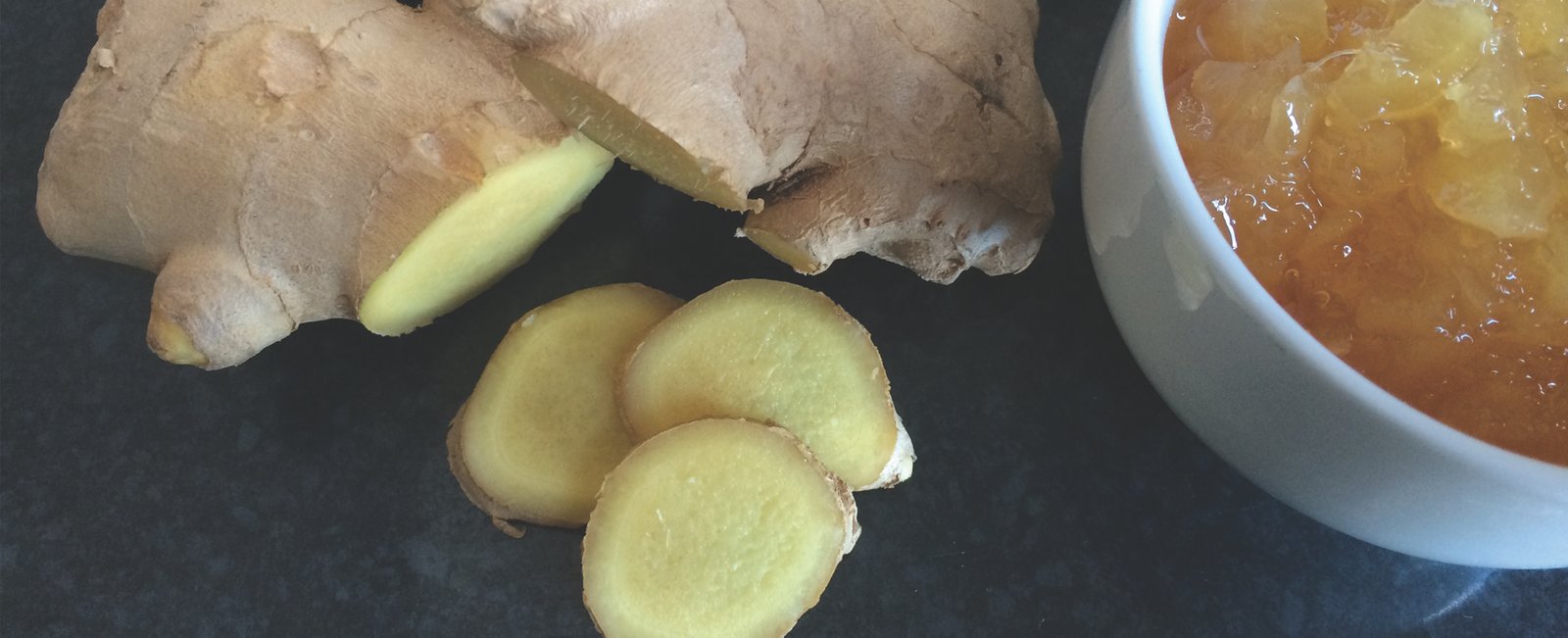
The spice we know as ginger is the underground rhizome of the ginger plant. It can be yellow, white or red in colour and has a rough, though firm texture. The taste of ginger is incredibly distinctive; strong, hot and seemingly both sweet and savoury at the same time. As a spice for flavouring food, ginger has become increasingly common in everyday cooking. Here in the Westcountry, we love a ginger fairing with our cup of tea, but there’s nothing like a gingery hit to spice up an evening meal – I really love this recipe for soy & ginger salmon, perfect for summer! But it’s not just found in home cooking; ginger is used as flavouring in the food and drinks industry as well as for fragrance in soaps and cosmetics.
Ginger is also a main ingredient in a lot of antacid, laxative and anti-gas medications. It has been used in Chinese medicine for around 2,000 years to treat nausea, diarrhoea and stomach upsets. It is still recommended by doctors to ease morning sickness in pregnant women, and there is currently research being undertaken into the uses of ginger in preventing nausea from chemotherapy, reducing inflammation of the bowels as a preventative measure for colon cancer and as a possible component of future asthma treatments. As a home aid to digestion, ginger can be taken as a tincture, eaten raw or cooked, on its own or as part of a meal, or even as an easy to make tea.
Both the medicinal and culinary uses for ginger can be traced back to Southeast Asia, to which ginger is native. Its exportation to the Roman Empire accounts for its modern widespread usage, though it was not until medieval times that it became a popular addition to sweets and cakes. As ginger became more popular, its price increased – until the sixteenth century, when 1lb of ginger cost the equivalent of an entire sheep. Nowadays it is much more affordable and easy to pick up from your local supermarket.
*This article is intended for interest only – use of herbs given are traditional and do not reflect the herbs efficacy. It is not intended, nor should be taken as medical advice. If you have a medical condition please consult a qualified health professional prior to using any herbal preparation. Although the facts have been checked carefully, we cannot guarantee the reliability of information provided. Essential oils should not be used on children or vulnerable adults (elderly, breast feeding or ill) or during pregnancy. Some essential oils and herbs can be toxic, whether taken internally or used on the skin – your health care professional will advise.