Posted on — Leave a comment

Anglesey Eggs

As always, we had a fantastic time at our monthly evening meal! Thank you to everyone who came, we love the community spirit and it’s great fun hosting you all. For those of you who missed it, we had a Welsh theme as a belated St David’s Day celebration, and Susan whipped up her own version of Anglesey Eggs (spoiler alert, they were delicious!). Here’s her recipe so you can give it a go at home…


Anglesey Eggs

 For 4 people

500g potatoes, peeled and chopped

50g butter

4 leeks, sliced

50g butter

50g flour

½ litre milk

mustard powder to taste

bay leaf

150g mature cheddar grated

extra cheese to top, grated

8 hard boiled eggs


– Boil and mash the potatoes.

– Fry the leeks in the butter until tender and then mix into the mashed potatoes.

– Put the potatoes in the bottom of an oven proof dish.

– Quarter the boiled eggs and spread over the top of the mash.

– Melt the butter in a pan, add the flour and mustard and cook until frothy.

– Remove from heat and whisk in the milk a little at a time, add the bay leaf.

– Return to the heat and stir until it thickens.

– Remove from heat and stir in the grated cheese.

– Pour the sauce over the eggs and potato, sprinkle the remaining cheese over the top and put in a hot oven until the sauce is bubbly and brown.


It’s great served with herby bread (we used this Welsh recipe) and maybe even a crunchy salad. Enjoy!


Posted on — Leave a comment

Taste of Summer!

We love a glass of pimms – it makes it feel like summer no matter what the weather! Here’s our twist on the fabulous classic… We’ve made a special basket of plants, just for this purpose (not that we drink a lot *cough*)

Ingredients:

1 part Pimms No. 1

3 parts Sparkling Sicilian Lemonade

Fresh Apple Mint Leaves

Fresh Lemon Verbena Leaves

Fresh (Wild) Strawberry Halves

Fresh Cucumber Slices

Lemon Slices

Ice

Just pop your ice in a jug and pour over the Pimms. Add your fruit and leaves to taste and top up with lemonade. Find yourself a pretty straw and a nice spot in the garden and enjoy!

If you’re just not a fan of pimms (sacrilegious though it is) here’s a few more summer drink recipes – so you can get your practice in while it’s still spring!


Posted on — Leave a comment

Susan’s Lentil Dahl Recipe

So we had to cancel last week’s meal (booo…) due to illness, but to try and make up for it, we thought we’d give you our recipe so you can try it at home. To me, this meal is Indian comfort food at its best – a real winter warmer, or just as fabulous cold the next day. I recommend eating whilst in your pyjamas!

If Indian food is your thing, take a look at Manjulas Kitchen, for some fabulous recipes (and great watching!).

 Susan’s Lentil Dahl

1 onion finely chopped

1 carrot cut into thin slices

2 large potatoes cut into small cubes

couple of large handfuls of red lentils

½ block of creamed coconut (not milk and not a carton)

1 tsp black or brown mustard seed

1 tsp ground coriander

1 tsp ground cumin

1 tsp turmeric

½ tsp black pepper

1 tsp ground cardamom

1 inch piece of fresh ginger – peeled and finely grated

1 clove garlic crushed (totally optional, I don’t use this at all, but if you like garlic knock yourself out!)

ghee or oil – about two tablespoons

handful of fresh coriander leaves – chopped


Heat the oil or ghee in a large saucepan, when hot drop in the mustard seeds and leave until they start to pop, add the onion and cook until it starts to brown. Add the coriander, cumin, turmeric, pepper, cardamom, fresh ginger and the garlic if using. Cook the spices for a moment or two before adding in the carrots, potatoes and lentils and cook for a few seconds. Add enough water to completely cover everything and bring to the boil. Reduce heat to a simmer and cook until everything is soft, adding boiling water if it needs it. When it is cooked there should still be a good amount of liquid in the pot, now add the block of coconut and stir until it’s is completely dissolved, cook on for a minute or two until it thickens. Remove from heat and stir in the most of the fresh coriander, reserving a little for garnishing. Serve with yoghurt, mango chutney and a chapatti.

We recommend serving with onion (or cauliflower if you’re feeling adventurous) bhajis – check out our easy bhaji mix here.

Photo credit: srqpix via Foter.com / CC BY

Posted on — Leave a comment

Recipe – Gremolata

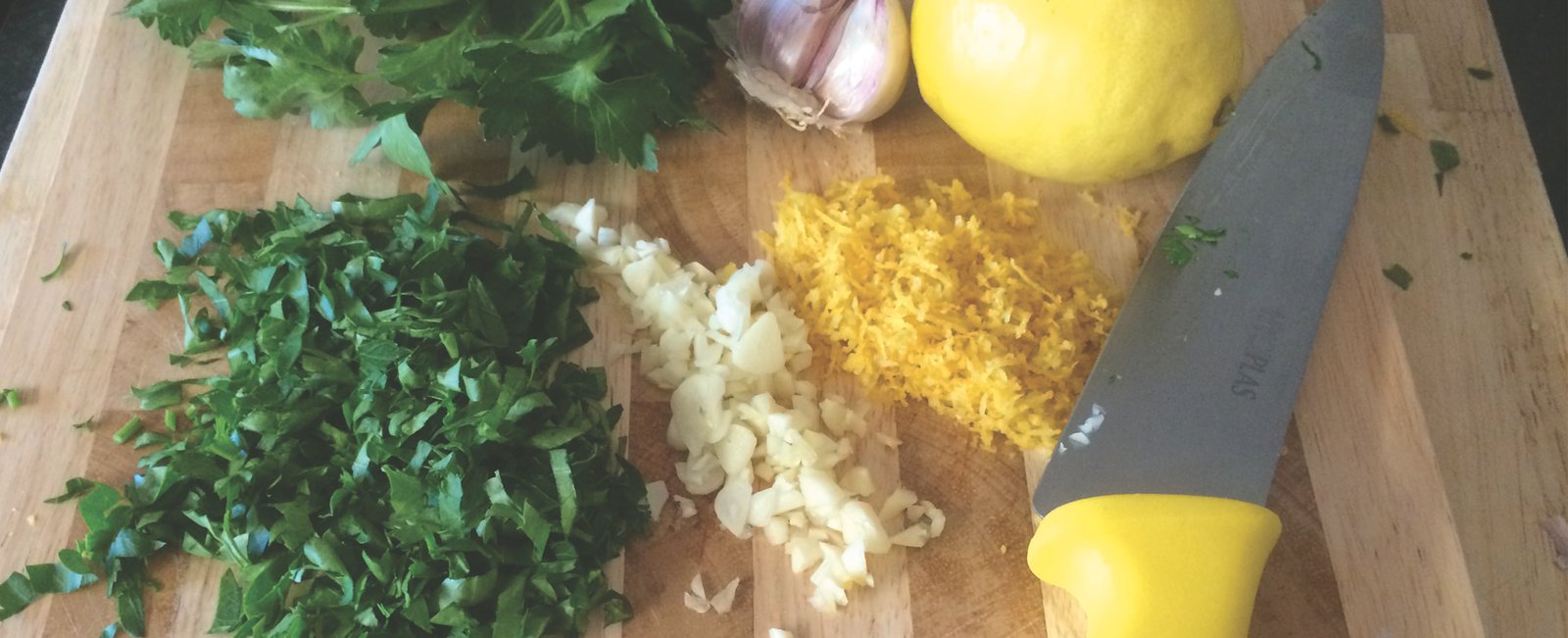
Herbs are often in short supply in the garden at this time of year; however there always seems to be plenty of parsley around! We think that gremolata is a fantastic way to make use of this herb. This super easy and extremely versatile recipe will use up all of that extra parsley you have hanging around, as well as give you a lovely garlic-y hit – always a necessity over winter!

finish-gremolata

Gremolata

Ingredients:

2 cups (500mls) parsley

4 tbsp (60mls) finely grated lemon rind

2 tbsp (30mls) garlic

Chop the parsley and garlic until very fine, if you have a Vitamix this will do the job for you, then mix together with the finely grated lemon rind. This spread can be used in all sorts of ways too; freeze in an ice cube tray and then use to season stews and soups, mix with cream cheese for a delicious cracker spread, use as a garnish or mix with breadcrumbs for stuffing or coating. A personal favourite of ours is mashing with butter, smearing on bread and then toasting in the oven for quick and delicious garlic bread. In a sealed container, kept in the fridge, this spread should last a while so you can have the chance to try it all sorts of ways!  In fact here is a great variation using walnuts.

Posted on — Leave a comment

Mock Duck in Spicy Plum Sauce Recipe

To start with, I just want to thank everyone who came to our Chinese New Year meal. It was a fantastic evening, where we all ate far too much… It’s a long way to come for some of you though, so to make sure no one is left out we thought we’d share our fabulous recipe!

For those that haven’t heard of it before, Mock Duck is the meatiest vegetarian meat alternative around. Made from wheat gluten, this has a taste and texture almost identical to real duck – and it makes fantastic duck pancakes. You can pick a tin up from your local health food shop or chinese supermarket, or even make your own. We combined it with our very own Spicy Plum Sauce, as an alternative to the traditional hoisin sauce. We also served it with oven baked noodles, just to make sure we got our dose of veg!

mock.duck.pancakes

Mock duck in spicy plum sauce

Ingredients:

1 tin mock duck

1 bottle St Kitts Herbery Spicy Plum Sauce


Method:

Drain the mock duck and rinse under cold water. Cut into thin strips, place in an ovenproof dish and cover with the Spicy Plum Sauce. Cover with foil and cook in oven at 180C for about 20 minutes, until hot and sauce is sticky.


Oven baked noodles

Ingredients:

1 pack fresh noodles

1 carrot – cut into very thin strips

1 small can water chestnuts drained

1 small can bamboo shoots drained

2 or 3 mushrooms sliced

handful of mange tout cut into thin strips

1 pak choi finely sliced

small bag of beansprouts

4 tablespoons of mirin

4 tablespoons of rice vinegar

tamari soy sauce to taste

good dash of dark sesame oil


Method:

Put all veg in a baking tray with the noodles, splash lightly with the sesame oil and toss until it is all coated. Sprinkle the mirin and rice vinegar over the top, cover with foil and bake in the oven on 180C for about 20 minutes until hot. Toss the noodles mix with the soy sauce and serve with the mock duck.

If you fancy the pancakes too then see the recipe here.


Posted on — Leave a comment

Exciting Times…

We can only apologise (once again) for the lack of blog posts recently – the days just don’t seem to be long enough! We did think you’d like to be kept updated though, so here’s a look at all the exciting events that we’ve got planned for the next few months…

stitchandbitch

lunchisserved

book.talk

italian.night


Dates for your diary:

Thursday 6th October – Stitch and Bitch

Wednesday 19th October – Irish Night

Friday 28th October – Halloween Trick or Treat

Thursday 3rd November – Toiletry Gift Making Workshop

Wednesday 23rd November – British Winter Staples Night

Details to follow…

If you see an event that takes your fancy, give us a call on 01840213442 to book. If you’ve got an event, group or meeting and are in need of a venue, give us a call and we’ll be happy to help. We’d love to see you all, so don’t be shy and come along!


Posted on — Leave a comment

Recipe – Cherry and Lavender Tea Smoked Chicken

Making the same meals over and over again, no matter how delicious, can quickly turn cooking into a chore. I’m a big fan of keeping it interesting with something a little bit different, and our new tea range gave me the chance to do just that. This recipe is extremely easy and unbelievably delicious – with the added bonus of sounding impressive!

smoked.chicken

Ingredients:

2 chicken breasts

1 tbsp olive oil

1tbsp dried thyme

1 tbsp black pepper (crushed or ground)

1 tbsp smoked paprika

3 tbsp Demerara sugar (any brown sugar will work just as well)

½ tbsp salt

4 tbsp brown rice

15 tsp cherry and lavender tea


Method:

– Start by mixing in a bowl the olive oil, thyme, black pepper, paprika, salt and 1 tbsp of sugar. Stir thoroughly and then coat the chicken breasts in the mixture and leave to one side. This can be done the day before and left in the fridge overnight, but will work just as well done just before cooking.

– Double line a wok or large saucepan with foil. Mix together the brown rice, cherry and lavender tea and the remaining brown sugar and add to the bottom of the foil. Cover with another piece of scrunched up foil.

– Put the wok on a high heat, until the pan starts to visibly smoke. Immediately turn the pan down to the lowest possible heat setting, place the chicken on top of the scrunched foil and tightly cover the top of the wok with a lid or more tin foil.

– Leave the covered chicken cooking on a low setting for 30 mins, then check with a thermometer that it is hot all the way through, If not, leave cooking and check again every 5 minutes until cooked. Take off the heat and leave to cool for 5 minutes before slicing and serving.

I served this chicken on a bed of green leaves with a cherry salad dressing and potato and chorizo gratin on the side. But be adventurous – it will also make for a great summer salad with cherries, a gourmet sandwich for lunches or even with a Thai noodle salad!

Posted on — Leave a comment

Herb of the Month – Pineapple Sage

The weather’s been a bit up and down recently, sunny one minute and raining the next – as they say in Cornwall, ‘don’t like the weather? Just wait five minutes’! We’ve still got some thriving plants though, including our herb of the month, Pineapple Sage.

Salvia elegans, commonly called Pineapple Sage, is a perennial shrub with tubular red flowers and a pineapple scent to its leaves (hence the name!). Native to Mexico and Guatemala, its flowers are attractive to hummingbirds and butterflies, in some areas was found to be in the top three plants visited by hummingbirds. It grows up to 1.5m tall and usually flowers between August and late autumn, though some varieties bloom much earlier in the summer. Pineapple sage is relatively easy to grow, liking rich and well-drained soil with lots of light and regular watering. It will flourish either in the ground or in a pot, just remember to leave it lots of space as its roots will grow into a large tangle.

When it comes to uses, pineapple sage shines as a culinary herb. Mixed with garlic and butter it can be a beautifully fruity rub for chicken or even an unusual way to make garlic bread. Its leaves are used in many pestos, with a slightly sweeter taste than common sage. They can also be tossed into fruit or vegetable salads, used as a garnish or to make hot or cold teas. Or try something more adventurous and make a pineapple sage syrup to use on pancakes, waffles, cakes or ice cream. Even the flowers are edible, making fantastic garnishes for desserts.

Pineapple sage is a member of the Salvia family, which takes its name from the Latin verb ‘salvare’, meaning ‘to save’ or ‘to heal’. It is not a surprise then that sage has many medicinal uses. It is traditionally used to lower blood pressure, ease anxiety, indigestion and heartburn. It is also used to ward off negativity, bad spirits, bad health and even bad luck. A home can be cleansed of all negative energy and influences by hanging garlands of sage around windows and doors, or ‘smudging’ (burning the herbs). Whether you use it for any of these things or not, it can’t be denied that pineapple sage is a beautiful addition to any garden.

Posted on — Leave a comment

Recipe – Gluten & Dairy Free Raspberry Chocolate Cake

Gluten Free, Dairy Free Raspberry Chocolate Cake

glutendairyfreecake

Whether you’re celebrating or commiserating, there’s always an excuse for cake! Unfortunately, those of us with special dietary needs can often be left out of the cake feast. That’s why we’ve adapted our original chocolate raspberry cake recipe to be gluten and dairy free – and still dense and delicious…

Ingredients:

300g margarine (Pure Sunflower spread works best for us)

300g gluten free plain flour (doves farm do a great one)

300g sugar

2 tsp vanilla extract

200g soya yoghurt (Alpro plain works well)

2 tsp baking powder (gluten free)

¼ tsp xanthan gum (if you can’t get hold of this,I’ve left this out before and it’s been fine)

70g cocoa powder

6 tbsp almond or rice milk


For the topping:

2 tbsp raspberry jam

225g raspberry dark chocolate

125ml soya cream (again, Alprodo a fantastic one)

100g fresh raspberries


Method:

– Preheat the oven to 190C/Gas Mark 5

– Grease and line a spring form cake tin (roughly 20cm diameter)

– In a bowl, beat together the margarine and sugar until light and fluffy

– Add the vanilla extract and yoghurt and whisk until well combined.

– Sieve in the flour, baking powder, cocoa powder and xanthan gum, the fold the mixture.

– Add the milk and stir until the mixture is smooth.

– Transfer the mixture to the cake tin and bake for 25-30 minutes, until a skewer inserted in the middle comes out clean.

– Leave to cool for 10 minutes, then transfer to a wire rack to cool completely.

– To make the ganache topping, melt the chocolate either in the microwave 10 seconds at a time, or in a bain marie on the stove.

– Once melted, add the soya cream and stir thoroughly, before putting to one side to cool. As it cools, it should harden to an easier to handle consistency.

– Spread the 2 tbsp of raspberry jam over the top of the cooled cake.

– Pipe or spread the ganache over the cake, top with the fresh raspberries and grate/curl some extra chocolate over for decoration.


I promise, you won’t even know it’s not the real thing!

Posted on — Leave a comment

Herbs for Health – Ginger

Easter is one of our favourite holidays – who doesn’t love an excuse to gorge on as much chocolate as you can? It’s all over now though and that chocolate has not left us feeling too healthy! That’s why this week’s herb for health is Zingiber officinale, better known as ginger.

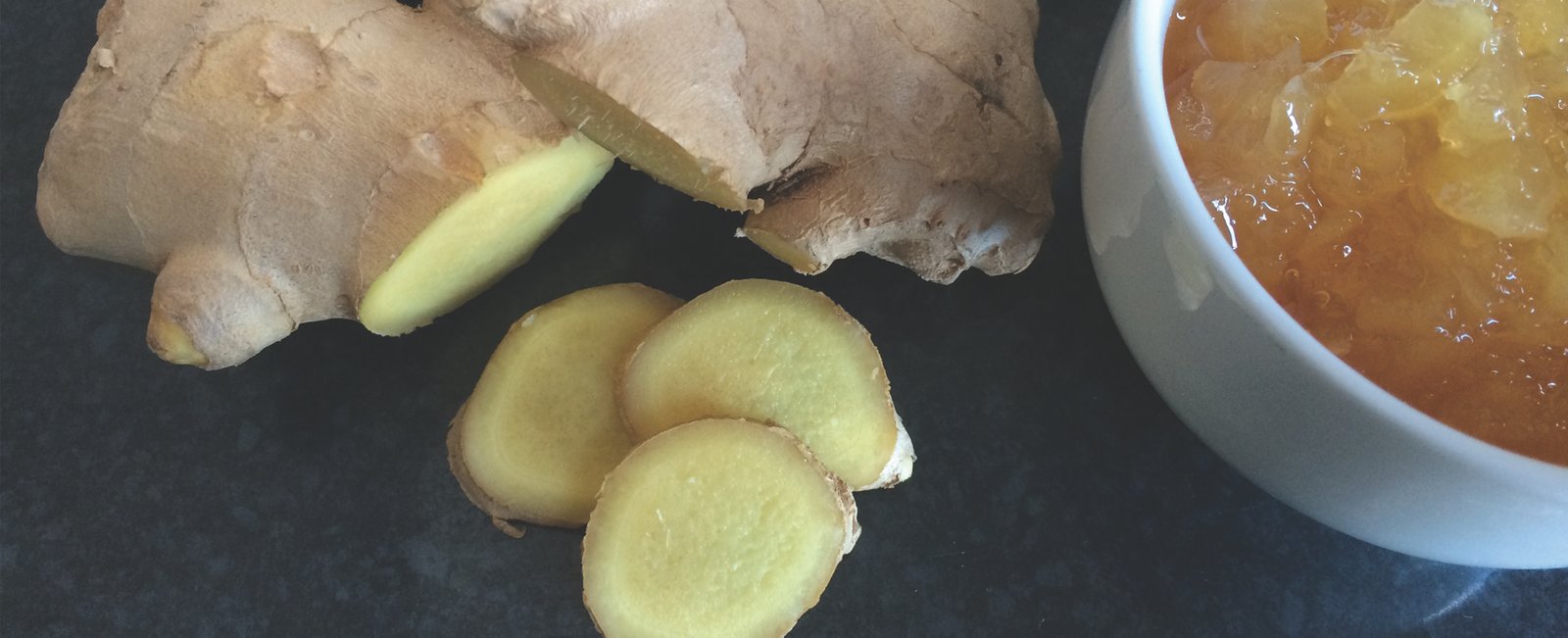
The spice we know as ginger is the underground rhizome of the ginger plant. It can be yellow, white or red in colour and has a rough, though firm texture. The taste of ginger is incredibly distinctive; strong, hot and seemingly both sweet and savoury at the same time. As a spice for flavouring food, ginger has become increasingly common in everyday cooking. Here in the Westcountry, we love a ginger fairing with our cup of tea, but there’s nothing like a gingery hit to spice up an evening meal – I really love this recipe for soy & ginger salmon, perfect for summer! But it’s not just found in home cooking; ginger is used as flavouring in the food and drinks industry as well as for fragrance in soaps and cosmetics.

Ginger is also a main ingredient in a lot of antacid, laxative and anti-gas medications. It has been used in Chinese medicine for around 2,000 years to treat nausea, diarrhoea and stomach upsets.  It is still recommended by doctors to ease morning sickness in pregnant women, and there is currently research being undertaken into the uses of ginger in preventing nausea from chemotherapy, reducing inflammation of the bowels as a preventative measure for colon cancer and as a possible component of future asthma treatments.  As a home aid to digestion, ginger can be taken as a tincture, eaten raw or cooked, on its own or as part of a meal, or even as an easy to make tea.

Both the medicinal and culinary uses for ginger can be traced back to Southeast Asia, to which ginger is native.  Its exportation to the Roman Empire accounts for its modern widespread usage, though it was not until medieval times that it became a popular addition to sweets and cakes.  As ginger became more popular, its price increased – until the sixteenth century, when 1lb of ginger cost the equivalent of an entire sheep. Nowadays it is much more affordable and easy to pick up from your local supermarket.

*This article is intended for interest only – use of herbs given are traditional and do not reflect the herbs efficacy. It is not intended, nor should be taken as medical advice.  If you have a medical condition please consult a qualified health professional prior to using any herbal preparation.  Although the facts have been checked carefully, we cannot guarantee the reliability of information provided.  Essential oils should not be used on children or vulnerable adults (elderly, breast feeding or ill) or during pregnancy.  Some essential oils and herbs can be toxic, whether taken internally or used on the skin – your health care professional will advise.