
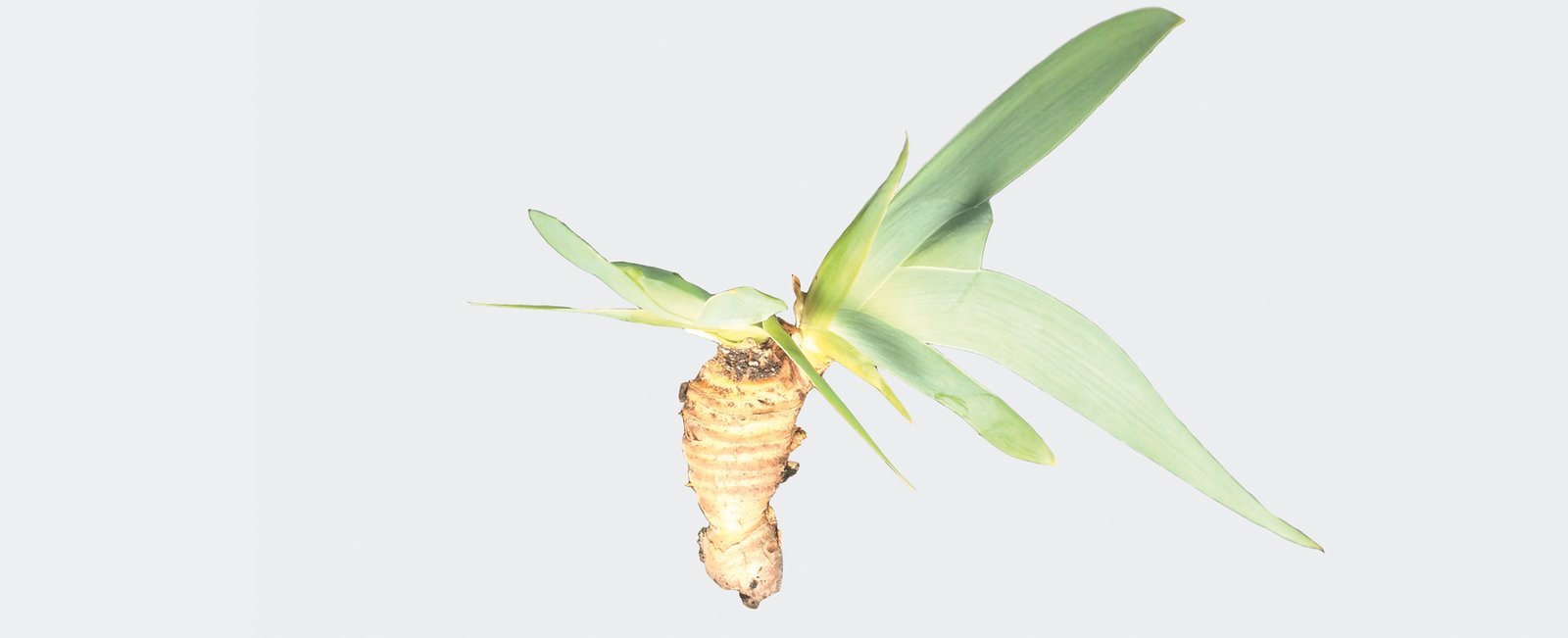
Iris germanica, better known as orris, is a species in the Iris genus. A perennial that blooms from April to June, orris can grow up to an impressive 1.2m high and 30 cm wide. It is an easy plant to grow from cuttings; the rhizome should be cut into sections, each with a growing bud, and planted in fertile, well-drained soil in full sun. The roots should be planted no less than 45cm apart to allow room for growing and should be well watered throughout the summer months. They will be ready to be divided every 4 to 5 years. It’s beautiful flowers come in a variety of colours, but it is best known for the uses of its rhizome.
Orris root was historically prized as a component of perfumes, though its beautiful violet scent does not appear until between 3 and 5 years of drying the root. Though it was at one point a staple in face powders and other cosmetics, it has been found to cause reactions in sensitive skin and is now more likely to be found in potpourri as a scent fixer. It is also makes a fantastic dry shampoo and when mixed with honey can be used as a moisturiser for dry skin.
Medicinally, orris root has been used to stimulate appetite, soothe headaches, toothache, muscle and joint pain, diabetes and some skin diseases. It can also be used to treat bronchitis and colds and to cause vomiting and empty the bowels (though I don’t know why you would want to do this!).
Culinary uses include as a tincture to flavour syrups and as one of the ingredients of Ras el hanout, a blend of spices associated with Moroccan cuisine. Most commonly, orris root is used as a tea preparation.
The Iris genus takes its name from the Greek goddess Iris, who was the personification of the rainbow. This is most likely due to the wide variety of beautiful colours to be found in the flowers of the Iris family of plants.