
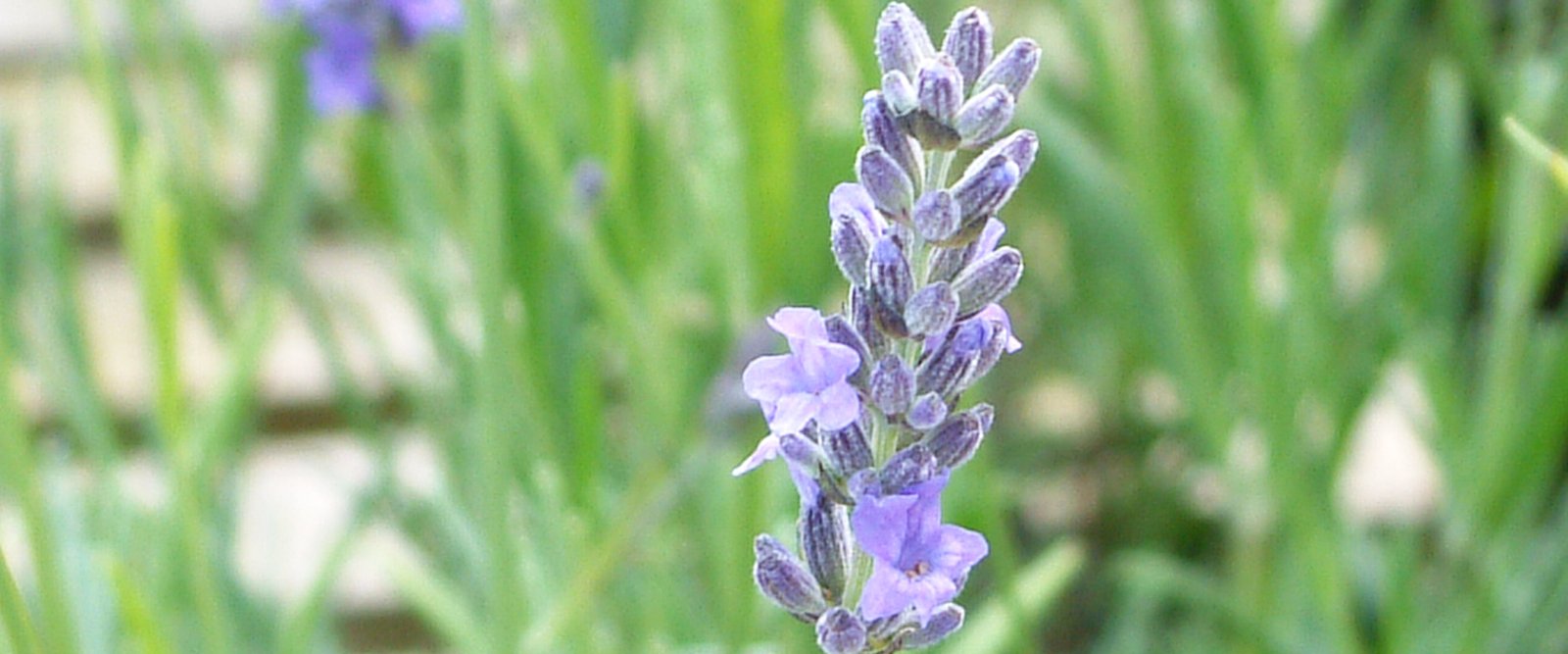
Lavandula is probably the most popular and useful of scented garden plants. Growing to a height of 30cm to 1m Lavender prefers full sun and will thrive in most soils including dry and stony ones; persistently wet situations will cause the plant to die. They are salt tolerant and make great plants for seaside gardens. Moderately frost hardy to frost hardy, this evergreen is easy to grow and makes a great container plant. In Tudor and Elizabethan times it was grown extensively in knot work gardens and even as lawns
Great for adding scent to the home – hang dried bunches around the house for their sweet smell, use dried flowers for lavender bags or pot pourri, or use the essential oil in oil burners or on a cotton wool ball.
Lavender is a calming herb; it aids sleep, can be used to treat minor burns, cuts and bites and makes a fabulous relaxing massage blend. It can also help relieve muscular aches and pains.
For as long as records exist lavender has been used to create healing balms and potions and was used ritualistically in the embalming of mummies. Folklore has stories of lavender for healing broken hearts; warding off the evil eye; mixing with other herbs to call upon fairies and spirits; for protection charms; and to attract love.
Once valued as a culinary herb it is making a comeback in the kitchen. Use sparingly to flavour cakes, biscuits, ice cream or even chocolate. Try this great recipe for lavender biscuits:
- 150g butter softened
- 150g sugar
- 225g plain flour
- tsp lavender flowers finely chopped
Put flour, sugar and lavender flowers into a blender with the butter and blend until it forms a soft dough. Shape dough into a log and put in fridge for 30 minutes. Use a sharp knife to cut into thin rounds, place on a greased baking sheet and bake in oven (gas 5 or 190C) for about 15 minutes until golden.