
Posted on — Leave a comment

Herb of the Month – Horseradish

So it’s been a while since we’ve written a blog (we’re slacking, I know!) and in the meantime winter has crept in properly. In our house that means stews, pies and roasts – as often as possible! There is a certain someone in our household, who shall remain unnamed (Paul), who can’t seem to eat any of these things without an appropriately large selection of condiments. Our herb of the month has been chosen in his honour – horseradish.

The best known, and possibly most delicious, use for horseradish is of course in condiment form as horseradish sauce (we personally like horseradish mustard). It’s a really simple sauce, made from grated horseradish root and vinegar – and it’s really easy to make at home. Not many people make it themselves though; in fact sales of horseradish in a bottle began in 1860 – making it one of the first convenience foods available. It remains popular throughout the world, with several varieties available, including with beetroot – yum…

Horseradish has other uses though, including medicinally. It can be used to treat urinary tract infections, kidney stones, bronchitis, rheumatism, sciatic nerve pain, gout and even colic. Though as always, consult your doctor before use!

Even better, horseradish is amazingly easy to grow at home. It will do best in a nice sunny spot, but this is the UK so it can also make do with some shade! It’s a perennial and best grown from a cutting. They can pretty much be planted and left alone, with possibly a little water if we (miraculously) have a dry spell, to be harvested the next year. When harvesting, you’ll want to make sure you remove the entire root and then replant only what you want – it can easily take over your garden if left to its own devices. It has to be said though, once you’ve got access to the fresh stuff, you won’t want it from a jar again!

Posted on — Leave a comment

Herbs for Health – California Poppy

It’s been a little while since we posted a blog – things have been a bit hectic for us busy bees! So, since it seemed appropriate for us, this week’s herb for health was chosen thanks to its calming properties – California Poppy, sometimes called ‘golden poppy’.

An annual flower, the California poppy is native to North America and is the state flower of California (there might have been a clue in the name!). Its beautifully colourful flowers brighten any garden and were first introduced to Europe as purely ornamental. However, as a member of the Papaveraceae family, this is a cousin to the better-known opium poppy and, though not as powerful, has some very similar effects. It was originally used by the Native Americans as a remedy for toothache and colicky pains, but in the last century its medicinal uses have been likened to a non-addictive alternative to the opium poppy. It can calm excitability, anxiety, restlessness, act as pain relief, aid insomnia and in some cases is used as a remedy for bed wetting and diseases of the bladder and liver. It has both sedative and anxiolytic properties, and recent research shows that when combined with magnesium and hawthorn it can treat a variety of anxiety disorders.

California poppy is most commonly taken internally, in the form of teas or tinctures. However, it can also be applied externally in lotions or liniments, to help ease tension headaches, sciatica, earache, back pain and arthritic pain. It is also antimicrobial and so can be applied to cuts and scrapes to ease pain and minimise risk of infection.

Though effects of long-term usage have yet to be determined, California poppy is safe to use for most people when taken orally for three months or less. As with many medicines, usage should be avoided during pregnancy or breast feeding. As one of the properties of California poppy is that of a sedative, it can cause the central nervous system to slow down. It should therefore not be mixed with anaesthesia or other medications used before or after surgery, or other sedative medications such as Benzodiazepines or CNS depressants.

*This article is intended for interest only – use of herbs given are traditional and do not reflect the herbs efficacy. It is not intended, nor should be taken as medical advice. If you have a medical condition please consult a qualified health professional prior to using any herbal preparation. Although the facts have been checked carefully, we cannot guarantee the reliability of information provided. Essential oils should not be used on children or vulnerable adults (elderly, breast feeding or ill) or during pregnancy. Some essential oils and herbs can be toxic, whether taken internally or used on the skin – your health care professional will advise.

Posted on — Leave a comment

Herb of the Month – Vipers Bugloss

This time of year is all about those blooming flowers, when all your gardening seems to pay off. One of the most satisfyingly beautiful plants you can grow, our herb of the month is Vipers Bugloss.

 Echium vulgare, also known as Vipers Bugloss, Adderwort, or Blue Devil, is characterised by its cylindrical spikes of gorgeous bell shaped flowers. From the Boraginaceae family, Vipers Bugloss will take 1-2 years to reach its maximum height, up to 75cm tall – all of which will be covered in flowers when it blooms in early summer. Each flower on the column will itself be 1 to 2cm in length. It originates in Europe and grows best in dry grassland or dunes, preferring sand or chalk soils. Whilst it is slightly fussy about soil, Vipers Bugloss will grow in either exposed or sheltered areas and in varying amounts of sunlight.

This is a fantastic plant to have in your garden if you want to attract bees or butterflies – both of which love the colourful flowers come summer. In the language of flowers, Vipers Bugloss represents falsehood or untruthfulness, most likely due to its snakelike appearance (as described in its alternative name, Snake Flower). The name ‘Bugloss’ is also derived from the appearance of the plant – this time its leaves. The term comes from the Greek word bou, meaning cow or ox, and the Latin glosso, meaning tongue. The leaves of the Vipers Bugloss could be said to resemble an ox-tongue in shape. Though it was once used as an anti-venom for snake bites, it is best to avoid touching it as it can cause irritation to the skin and will cause stomach upset if ingested.

Whilst it’s not always possible to grow in your garden (if you don’t have chalky soil or have kids who might take a bite!), it’s always worth keeping an eye out when you walk along the dunes, as this really is a stunning plant.

Posted on — Leave a comment

Herbs for Health – Valeriana officinalis

There are many herbs that are useful in a medicinal capacity but perhaps none are so well known as valerian. Valeriana officinalis, of the Valerinaceae family, is also known as valerian, Baldrian, cat’s love, cat’s valerian, kesso root, St George’s herb and garden heliotrope. Its medicinal properties lie in its root, which can be dried for use in tea or capsules, or distilled into oils and ointments.

valerian.flower

Though it has a relatively wide range of uses, valerian root is most commonly used for sleep disorders – particularly insomnia. It acts as a sedative to the brain and nervous system, allowing for sleep to come easily. As a remedy for insomnia, valerian is often combined with hops or lemon balm, either in a tea, pill, in a sleep pillow or even added to bath water. Many people choose valerian as an alternative to prescription sleeping pills, such as Valium, as it is less likely to leave you feeling groggy the next morning. Its sedative properties also lead it to be used in combination with other herbs as a remedy for conditions such as anxiety and stress, as well as symptoms related to these conditions, such as hysteria, panic, excitability, fear, migraines, stomach upset, depression and mild tremors. It is thought to help with sciatica and multiple sclerosis, shingles and rheumatic pain, as well as being useful to stabilise blood pressure and regulate arrhythmias. Some people also prescribe this for epilepsy, attention deficit-hyperactivity disorder and chronic fatigue syndrome. Some women use valerian to help with pain from menstrual cramping and symptoms associated with menopause. It is not recommended as safe for use when pregnant or breast-feeding. The usual dose of valerian is 1 teaspoon in oil form, 1 – 2 cups of tea or 1 – 2 capsules, though as you are unlikely to overdose on valerian you can play around until you find what suits you.

Though it is commonly used as a remedy for insomnia, there are many things to think about before taking valerian – including whether medicine is the best optionyou’re your condition. More information can be found here. Valerian tends to be most effective when used regularly, with the best results seen after around 2 weeks. However, there has been no research into the effects of long-term use of valerian. There can be side effects to taking valerian root, including headaches, dizziness and (counter-intuitively) sleeplessness. Due to its nature as a sedative, there can be reactions with other drugs and if you are due to undergo surgery under anaesthesia it is recommended you stop taking valerian at least 2 weeks beforehand.

*This article is intended for interest only – use of herbs given are traditional and do not reflect the herbs efficacy. It is not intended, nor should be taken as medical advice. If you have a medical condition please consult a qualified health professional prior to using any herbal preparation. Although the facts have been checked carefully, we cannot guarantee the reliability of information provided. Essential oils should not be used on children or vulnerable adults (elderly, breast feeding or ill) or during pregnancy. Some essential oils and herbs can be toxic, whether taken internally or used on the skin – your health care professional will advise.

Posted on — Leave a comment

Herb of the Month – Honesty

With such beautiful weather recently, our plants have been flourishing. This month’s stand out has got to be Honesty. Known best for its seed pods, rather than its flowers; Honesty can be a beautiful addition to your garden without being too ostentatious!

From the genus Lunaria, honesty is also sometimes called a ‘silver dollar plant’. There are several variations of Lunaria, including ‘Lunaria annua’, which has a pure white flower and is biennial (meaning a plant grown from seed will take two years to come to fruition and then die). If you’re looking for an Honesy plant that doesn’t take quite so long to flower, there is also the perennial ‘Lunaria rediviva’, This has cross shaped flowers in a pale lavender colour, with heart shaped green leaves. Both these variations have distinctive seed heads, flat and almost papery; the annua Honesty has round, silver dollar shaped seed heads (from which they get their nickname!), whilst the rediviva seed heads are more elliptical.

The seedpods that are so distinctive in Honesty plants are also what make them so easy to plant – and even easier for them to overtake your garden! Carried on the wind, the papery pods will dry out and release the seeds to germinate where they fall. If you want to grow Honesty from seed, all you have to do is collect these pods, let them dry out and collect the seeds. They will flourish planted straight into the garden, though if you’d like to grow them in planters or seed trays you should add a little old compost first. Honesty will develop thick roots, almost like tubers. This is common amongst the brassica family to which Honesty belongs, along with mustard. Due to this, they should not be kept in pots for an extended amount of time, as the roots will not have room to develop properly. They will flourish in almost any garden, though it will do better in less acidic conditions. The perennial rediviva prefers to be kept slightly damp and all variations of Honesty prefer not to be overfed (so stay away from the manure!). Try not to plant in the shade, though semi-shade should be fine.

These are a great plant for us gardeners who don’t want to expend too much effort! They’ll grow fantastically if pretty much left alone. This also makes them great for kids learning to garden – they can watch the whole process from seed to flower and there’s not a lot that can go wrong!


Posted on — Leave a comment

Herb of the Week – Lavandula

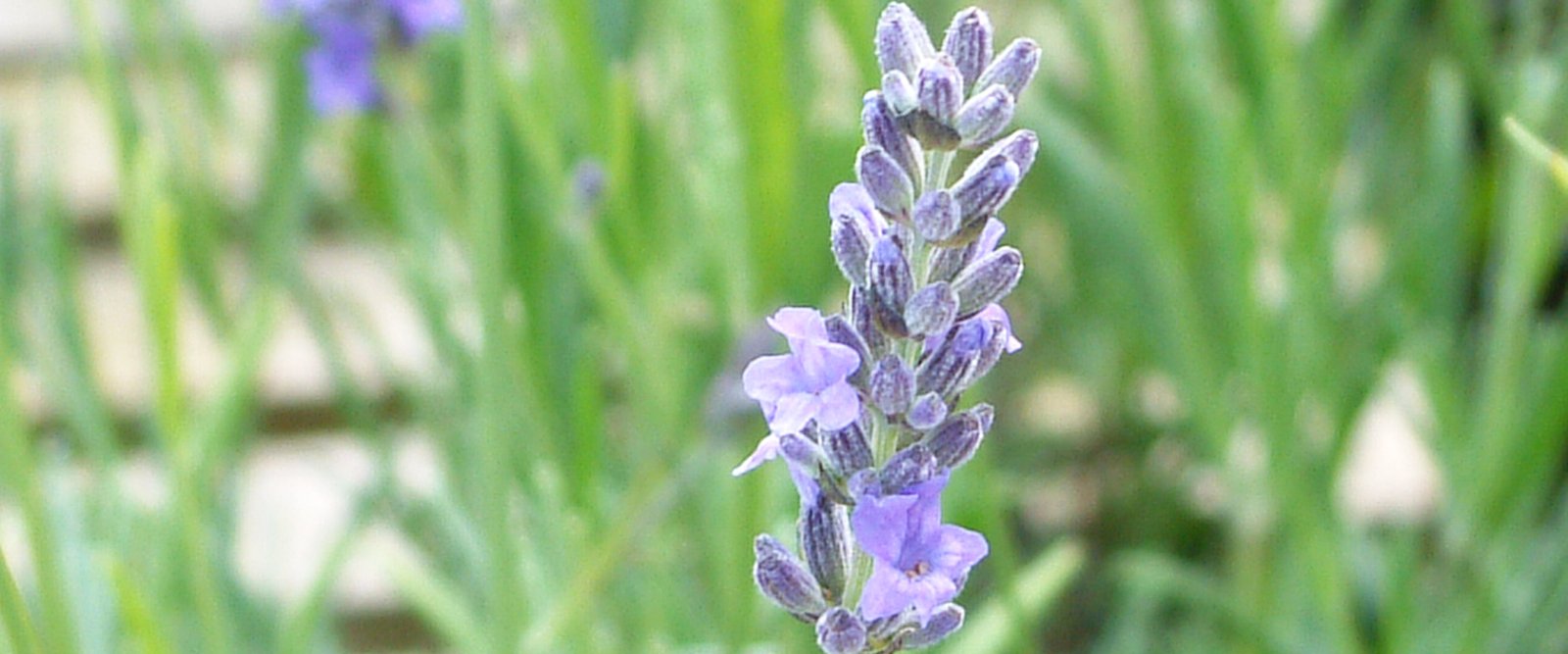
Lavandula is probably the most popular and useful of scented garden plants.  Growing to a height of 30cm to 1m Lavender prefers full sun and will thrive in most soils including dry and stony ones; persistently wet situations will cause the plant to die.  They are salt tolerant and make great plants for seaside gardens. Moderately frost hardy to frost hardy, this evergreen is easy to grow  and makes a great container plant.  In Tudor and Elizabethan times it was grown extensively in knot work gardens and even as lawns

Great for adding scent to the home – hang dried bunches around the house for their sweet smell, use dried flowers for lavender bags or pot pourri, or use the essential oil in oil burners or on a cotton wool ball.

Lavender is a calming herb; it aids sleep, can be used to treat minor burns, cuts and bites and makes a fabulous relaxing massage blend.  It can also help relieve muscular aches and pains.

For as long as records exist lavender has been used to create healing balms and potions and was used ritualistically in the embalming of mummies.  Folklore has stories of lavender for healing broken hearts; warding off the evil eye; mixing with other herbs to call upon fairies and spirits; for protection charms; and to attract love.

Once valued as a culinary herb it is making a comeback in the kitchen.  Use sparingly to flavour cakes, biscuits, ice cream or even chocolate.  Try this great recipe for lavender biscuits:

  • 150g butter softened
  • 150g sugar
  • 225g plain flour
  • tsp lavender flowers finely chopped

Put flour, sugar and lavender flowers into  a blender with the butter and blend until it forms a soft dough.   Shape dough into a log and put in fridge for 30 minutes.  Use a sharp knife to cut into thin rounds, place on a greased baking sheet and bake in oven (gas 5 or 190C) for about 15 minutes until golden.