
Posted on — Leave a comment

Herb of the Month – Pineapple Sage

The weather’s been a bit up and down recently, sunny one minute and raining the next – as they say in Cornwall, ‘don’t like the weather? Just wait five minutes’! We’ve still got some thriving plants though, including our herb of the month, Pineapple Sage.

Salvia elegans, commonly called Pineapple Sage, is a perennial shrub with tubular red flowers and a pineapple scent to its leaves (hence the name!). Native to Mexico and Guatemala, its flowers are attractive to hummingbirds and butterflies, in some areas was found to be in the top three plants visited by hummingbirds. It grows up to 1.5m tall and usually flowers between August and late autumn, though some varieties bloom much earlier in the summer. Pineapple sage is relatively easy to grow, liking rich and well-drained soil with lots of light and regular watering. It will flourish either in the ground or in a pot, just remember to leave it lots of space as its roots will grow into a large tangle.

When it comes to uses, pineapple sage shines as a culinary herb. Mixed with garlic and butter it can be a beautifully fruity rub for chicken or even an unusual way to make garlic bread. Its leaves are used in many pestos, with a slightly sweeter taste than common sage. They can also be tossed into fruit or vegetable salads, used as a garnish or to make hot or cold teas. Or try something more adventurous and make a pineapple sage syrup to use on pancakes, waffles, cakes or ice cream. Even the flowers are edible, making fantastic garnishes for desserts.

Pineapple sage is a member of the Salvia family, which takes its name from the Latin verb ‘salvare’, meaning ‘to save’ or ‘to heal’. It is not a surprise then that sage has many medicinal uses. It is traditionally used to lower blood pressure, ease anxiety, indigestion and heartburn. It is also used to ward off negativity, bad spirits, bad health and even bad luck. A home can be cleansed of all negative energy and influences by hanging garlands of sage around windows and doors, or ‘smudging’ (burning the herbs). Whether you use it for any of these things or not, it can’t be denied that pineapple sage is a beautiful addition to any garden.

Posted on — Leave a comment

Recipe – Sweet potato, sausage and sage frittata

The sun is finally starting to come out (briefly but it’s something!) and that means it’s time to leave the stews and soups behind and bring out the summer meals. You don’t want to spend too much time cooking though, when you could be enjoying the sunshine, so this quick, simple Frittata recipe is the perfect meal choice. The sweet potato is a novel twist on a spring classic.

Ingredients

1 large sweet potato, diced

6 sausages (spicy sausages work particularly well), sliced

1 onion, diced

1 sweet pepper, sliced

6 eggs, beaten

1 tsp sage, chopped

handful of baby spinach leaves

salt and pepper to taste

Method

– Boil a pan of water and add the sweet potato. Keep on the boil for roughly 8 minutes, until the sweet potato starts to feel tender. Then drain and keep to one side.

– In a heavy based frying pan, shallow fry the sliced sausage until cooked through, then remove onto a kitchen towel lined plate and keep to one side.

– Fry the onion and pepper in the left over oil from the sausage, until the onion is translucent.

– Add the sausage back to the frying pan, along with the sage, and fry until the peppers are soft. Then add the sweet potato and spinach, stir until thoroughly mixed.

– In a separate bowl, beat the eggs well and season with the salt and pepper.

– Turn the hob down to simmering temperature and pour the egg over the sausage and vegetable mix in the pan. Be sure that the egg is evenly spread throughout the pan.

– Leave to simmer for roughly 6 minutes, until the egg has cooked around the sides of the pan and begun to firm across the top.

– Take the frittata off the hob and grill until the egg is completely firm all the way through and the top is golden brown.

– Serve with salad or green beans and eat out in the sunshine!

Posted on — Leave a comment

Handy Kitchen Herbs

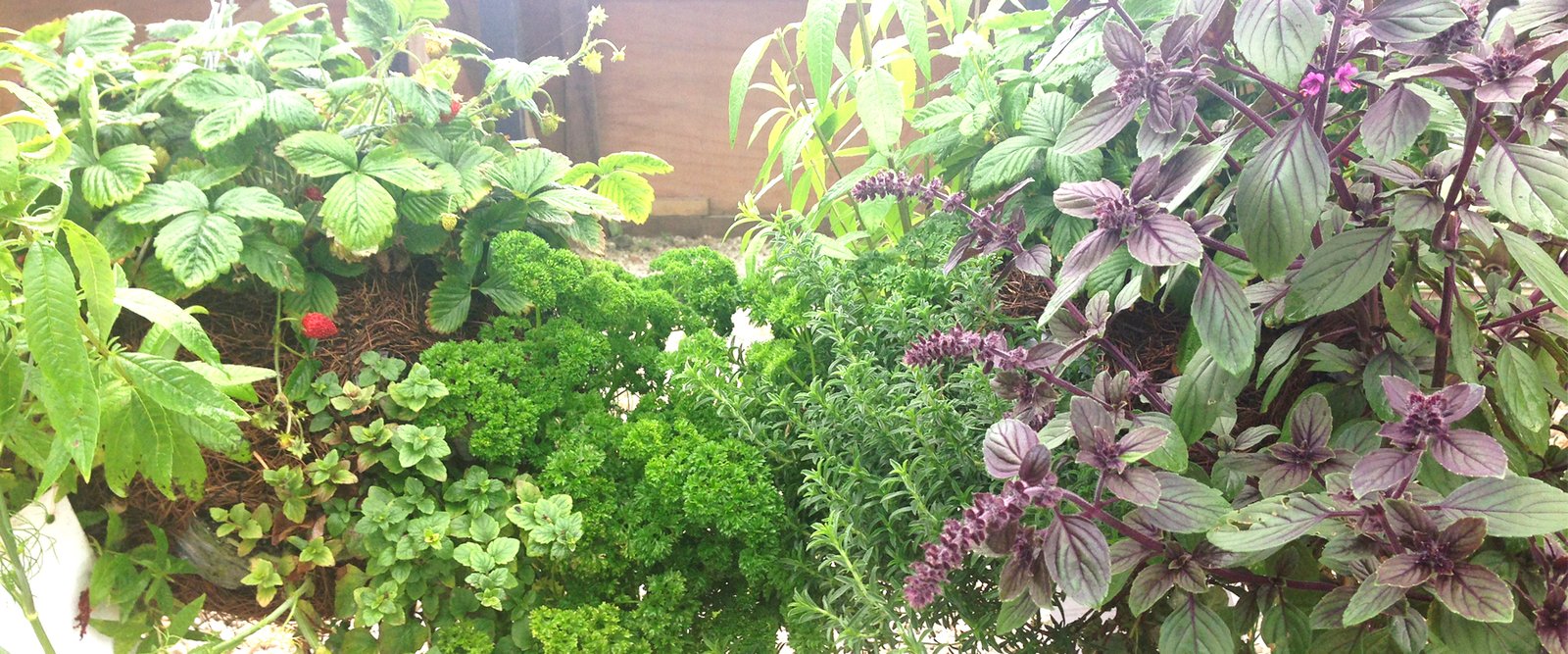
We made some fab hanging baskets recently, stuffed full of beautiful, useful herbs – and it got us thinking! Why not grow your favourite culinary herbs in planters right outside your kitchen door? We know that sometimes everyone needs a reminder of how easy it is to add a twist to otherwise standard foods, so although we’re probably preaching to the choir, here’s our handy list of kitchen herb combinations.


Blackcurrant and sage

This unlikely combination is guaranteed to please the taste buds. Just a tiny pinch of sage is all you’ll need to add an unusual flavour to this seasonal fruit. Check out this recipe for fantastic fruity tarts and experiment with the use of sage – you won’t regret it!


Strawberries and mint

While there are still plenty of strawberries around, why not have a go at adding a little finely chopped mint and sugar for an easy but exciting pudding. If you’re feeling really adventurous, try your hand at a mint jelly  and serve with crème fraiche.

Potatoes and rosemary

Sometimes the classics really are the best and it doesn’t get better than potatoes and rosemary! Whether it’s a pinch in your mash or a sprinkle on your roasties, it’s an easy trick that never fails to please. Rosemary’s great fresh or dried, so if you need to stock up have a look in our food hall.

Butter and fennel

We all know that everything tastes better with butter, but why not try something new with butter and fennel? Mash a sprinkle of fennel in with your butter for a super easy seasoning, great for roasting fish, slathering on bruchetta or use instead of garlic butter for a great garlic bread alternative!

Yoghurt and coriander

The summer months are a great time for casual eating, finger food and dips in the garden with a cocktail in hand! Spruce up your yoghurt with a handful of chopped coriander leaves – great just with breadsticks, cucumber and carrots or try it as an unusual salad dressing.